 By
By 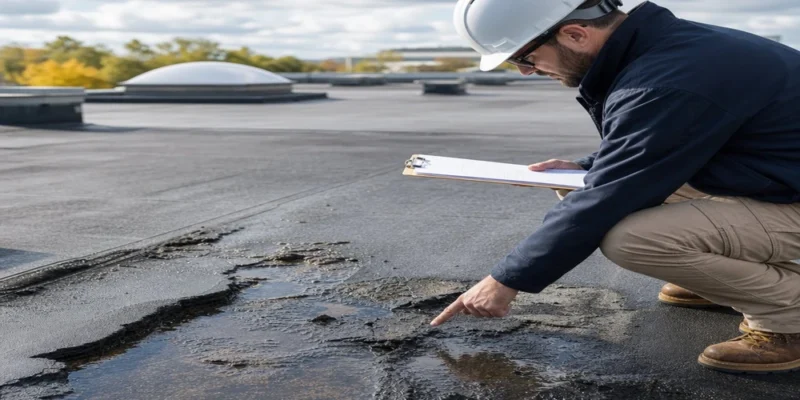
Your roof protects more than just your building from the top down. It’s also an essential defense for everything under its eaves: inventory, tools and equipment, staff, tenants, insulation and more. As a result, the long-term value of your property is intrinsically tied to its protection.
If your roof has multiple leaks, is aging, or is requiring more repairs, a commercial roof replacement could be a sound decision. But replacement is a big project and one that demands thoughtful planning to execute effectively. That’s why a sound roof replacement plan is worth every penny.
commercial roof inspection showing roof wear and leak concerns
When Is a Commercial Roof Replacement Necessary?
A commercial roof doesn’t need to be replaced just because it leaks. Minor holes, punctures, or damaged flashing can often be repaired, leaving the rest of the system to do its job. And as long as the majority of the roof remains functional and well-maintained, repairs may be sufficient.
However, when a single issue causes problems in multiple areas, repairs will not be a long-term solution. The same goes for the roof’s age: when there’s not enough life left in the system to warrant repairs, replacement is typically the right choice.
A commercial roof replacement may be needed if:
- There are multiple leaks
- Insulation has become saturated
- Water pools in multiple places
- Routine costs continue to climb
- There are damaged or broken seams or flashing
- Moisture damage has occurred inside
- The same problem continues to return despite repairs
- Heating and cooling bills are rising
- There’s storm, wind, or impact damage
Selecting the Right Commercial Roofing System
A building’s roof is typically flat or low slope. Some are steep slopes or metal roofs, however. And a good commercial roof replacement plan considers the building’s slope and drainage as well as the climate and budget.
The best system may be a single-ply, built-up, modified bitumen, metal roofing, or some types of coating. Each has its own strengths and weaknesses: for example, single-ply roofing is very cost effective, while a metal system is great for durability and impact resistance. Some roofing systems are highly energy efficient (as you can see at www.energy.gov/energysaver), and some require minimal maintenance.
Budget is one factor, but it shouldn’t be the only one. The best replacement is an investment that doesn’t break the bank and offers long-term energy efficiencies and a lifespan that matches or exceeds other options.
What Happens During the Project
Commercial roof replacement projects usually begin with a detailed inspection, which can identify signs of distress on the roof itself, around flashings or seams, or elsewhere on the roof. It can also determine whether repairs are needed at the building’s deck or insulation or in the roof’s drainage.
After the project team has evaluated the roof and assessed its condition, it’s time to map out the project. The scope will typically include roof surface preparation, materials selection and installation, safety protocols, with more on this site, roof deck repair and other details, including how the new roofing system will accommodate roof drains and other roof penetrations and transitions (such as edges and vents).
Many commercial roof leaks don’t start in the middle of the roof. That’s where a careful inspection can really help. By identifying and replacing the weakest links around transitions and penetrations, roof replacement is more likely to succeed in the long term.
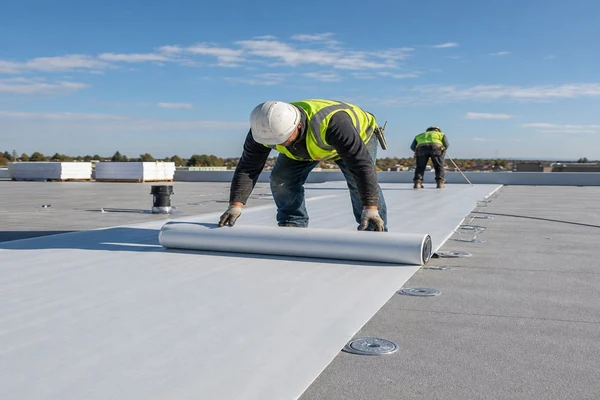
commercial roofing crew installing a membrane roof system
How to Plan Ahead for Business Operations
Commercial roof replacement projects can affect a business’s everyday operations. There is noise generated during the project and the need to stage equipment. There are also access requirements during the day and potential downtime due to bad weather. Clear communication and planning can minimize disruption.
Before work begins, review the following considerations:
Good communication is key. Letting workers and building occupants know what’s expected of them helps make the project safer and more effective for everyone involved.
Commercial Roof Replacement Cost Considerations
A commercial roof replacement cost can fluctuate depending on how much work needs to be done. Materials, insulation, the amount of work required to tear off the old roofing system, deck repairs, drainage improvement work, the building height and the presence of rooftop equipment are all factors.
However, cost shouldn’t be the only concern. Some systems may be more energy efficient; others may have a longer lifespan; and good roof systems can save money on repairs down the line.
Good Commercial Roof Replacement Projects Begin With a Plan
Commercial roof replacement is a big job, but one that’s worth it if done right. When building owners and management work with knowledgeable commercial roofing companies to get a good inspection, choose the right roofing system and understand their commercial roofing project, they can make confident decisions to improve protection and building performance.



Comments