
 By
By 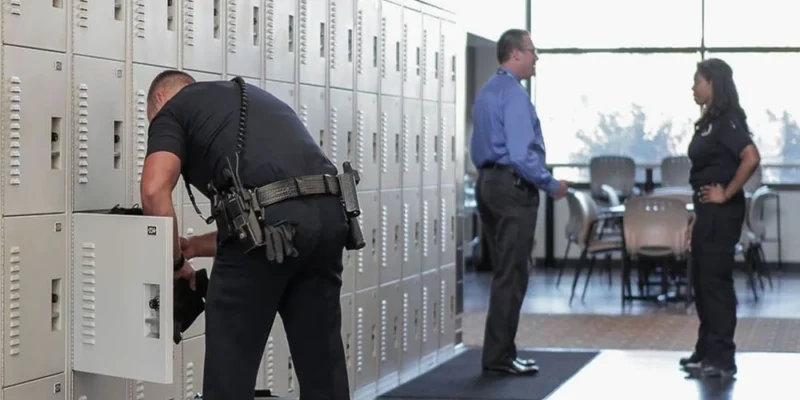
Public safety agencies approach uniform and gear storage by separating clean and contaminated items, giving each member secure access to duty equipment, and choosing lockers that stand up to heavy daily use. Fire stations, police departments, and emergency medical services stations store more than street clothes. They store the equipment members depend on during every call.
The United States has roughly 1 million career and volunteer firefighters (U.S. Fire Administration).
Why is gear storage different in public safety facilities?
Gear storage in public safety facilities differs because members store bulky, expensive, and sometimes contaminated equipment alongside personal items, and they need fast access at the start of every shift. A standard office locker rarely fits a turnout coat, duty belt, boots, and helmet.
Contamination risk in station design
Public safety work also involves exposure to smoke, fluids, and other hazards. Separating contaminated gear from clean uniforms and living areas is a recurring concern in station design. Reducing exposure to contaminants after incidents is a core topic in firefighter health and safety guidance (U.S. Fire Administration).
What types of gear need dedicated storage?
Gear that needs dedicated storage in public safety facilities includes protective clothing, duty equipment, uniforms, footwear, and personal items. Each category has different size, ventilation, and security needs.
Common storage categories
- Structural firefighting turnout gear
- Law enforcement duty belts, vests, and equipment
- EMS uniforms and response bags
- Boots and footwear
- Clean station uniforms and street clothes
- Personal valuables and electronics
Grouping these categories thoughtfully allows agencies to specify the right locker type for each rather than forcing all items into one compartment.
How uniform-focused lockers are configured
Uniform-focused locker collections are offered in 3 configurations, standard, security box, and foot locker, designed for easy access to uniforms and equipment (ASI Storage Solutions).
How do open-access gear lockers support fast response?
Open-access gear lockers support fast response by allowing members to see and grab equipment without opening doors or operating locks. Turnout gear lockers in apparatus bays are often open-front or mesh designs so gear can dry and be retrieved in seconds.
Airflow for drying gear
Airflow is a second benefit. Protective gear exposed to heat, moisture, and sweat needs to dry between calls. Open or highly ventilated designs help gear dry faster than closed compartments.
Features common in gear-ready lockers
- Open fronts or mesh doors for visibility and airflow
- Heavy-duty hooks for coats, pants, and helmets
- Boot shelves near the floor
- Upper shelves for helmets and small equipment
- Durable construction that resists impact from gear and tools
Where do secure personal lockers fit?
Secure personal lockers fit in locker rooms and bunk areas where members store street clothes, clean uniforms, and personal items between shifts. These lockers usually have doors and locks, and they sit away from apparatus bays to keep contaminants out of personal storage. Law enforcement agencies often add security box compartments for items that require additional control.
How should stations separate clean and contaminated storage?
Stations should separate clean and contaminated storage by locating gear lockers in apparatus bays or dedicated gear rooms and keeping personal lockers, living quarters, and kitchens in clean zones. Physical separation reduces the spread of contaminants into areas where members eat and sleep.
Zoned station design
Newer stations frequently use a zoned design approach, and storage placement follows those zones:
- A hot zone with apparatus bays and decontamination areas
- A transition zone with gear rooms and laundry
- A cold zone with offices, kitchens, and dormitories
Zoning practices for storage
- Place turnout gear storage outside living areas
- Provide laundry and decontamination facilities near gear storage
- Keep personal lockers in clean zones
- Route members through transition areas after calls
- Store clean uniforms separately from used protective clothing
Workplace safety standards may also apply to how agencies handle contaminated items. Employers whose workers may be exposed to blood or other potentially infectious materials have specific federal obligations, which can include EMS and fire personnel (Occupational Safety and Health Administration).
What durability features matter for public safety lockers?
Durability features that matter for public safety lockers include heavy-gauge steel, welded construction, reinforced hinges, and finishes that resist chipping. These lockers face daily contact with tools, boots, and heavy equipment.
Durability considerations
- Heavy-gauge doors and frames
- All-welded construction for rigidity
- Multi-knuckle or continuous hinges
- Recessed handles that resist damage
- Bases that allow floor cleaning beneath
Lockers in apparatus bays may also face temperature swings and humidity from wet apparatus and gear. Material and finish choices should account for those conditions.
How do agencies plan locker capacity?
Agencies plan locker capacity by counting members across all shifts, including part-time and volunteer personnel, and adding space for growth. Each member may need both a gear locker and a personal locker.
How shift schedules affect capacity
Shift schedules affect planning. Fire departments with rotating 24-hour shifts may assign a personal locker to every member while sharing bunk-area storage. Police departments with overlapping shifts may need enough lockers for peak shift change periods.
How do volunteer and combination departments approach storage?
Volunteer and combination departments approach storage by providing gear lockers for every responding member, even when those members are not on site full time. Volunteers often respond directly from home or work, so their gear must be ready in the station whenever a call comes in. Clear labeling and consistent layouts help members locate gear quickly during a response.
What maintenance keeps public safety lockers in service?
Maintenance that keeps public safety lockers in service includes regular cleaning, hardware inspection, prompt repair of damaged doors, and periodic replacement of worn hooks and shelves. Gear lockers in particular should be cleaned on a schedule because they hold equipment exposed to contaminants.
Storage as a working tool
Well-maintained storage protects equipment investments and supports member health. For agencies that respond to emergencies around the clock, lockers are not furniture. They are working tools that help members get out the door quickly and come home safely.










Comments