
 By
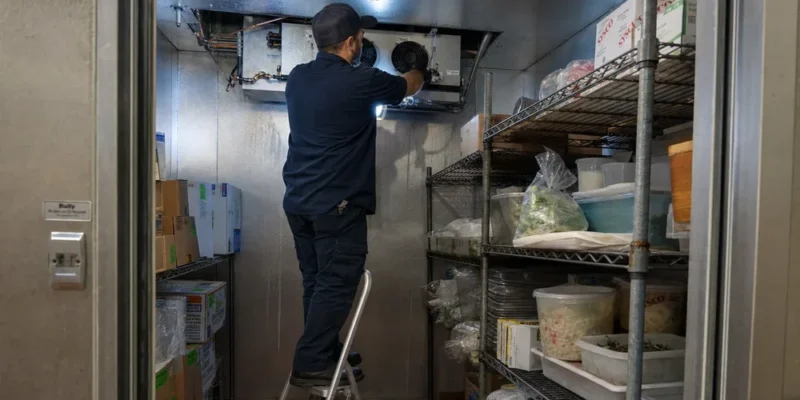
North Carolina asks every restaurant, school cafeteria and hospital kitchen to keep cold food at 41°F or below. The state phased that rule in over several years, and the old 45°F allowance ended on January 1, 2019. Four degrees does not sound like much. For a walk-in cooler that was already working hard on a July afternoon, though, it is often the difference between passing an inspection and throwing away a full case of chicken.
Kitchen managers looking for Sanford commercial services that treat refrigeration as seriously as comfort cooling tend to end up talking with the team behind Sanford commercial services, which works on equipment in commercial kitchens, hotels, healthcare facilities, schools, government buildings and cold storage rooms. From its base on Minter School Road, hsmechanicalservices.com covers roughly sixty miles around Sanford, answers emergency calls around the clock, and builds planned maintenance contracts around each facility’s equipment.
The Slow Slide Nobody Notices
A walk-in rarely dies all at once. More often it drifts. The box that held 36°F last spring now sits at 39°F, then 40°F during the lunch rush, then 42°F on the hottest afternoons. Staff adapt without thinking about it. Someone props the door less often, someone else turns the thermostat down a notch, and the system runs longer every day to hold the same line.
That drift usually has a cause that can be traced, and the cleanest way to find it is to follow the path heat takes into the box and back out again. That path starts at the door and ends on the roof.
Where the Cold Leaks Out First
The door is the most abused part of any walk-in. It gets bumped by carts, leaned on by people carrying full arms, and opened hundreds of times a day.
Gaskets tear at the bottom corners first, where mop water and floor debris collect. A simple check involves closing the door on a sheet of paper at several points around the frame. If the paper slides out with no resistance, the seal is not doing its job. Hinges that have sagged even slightly leave a gap along the top edge that is easy to miss and expensive to ignore.
Self-closing hardware matters just as much. A door that drifts shut but never quite latches lets warm, humid kitchen air pour in all shift long. Strip curtains help in busy kitchens, but only when the strips hang straight and complete. Missing or folded strips create a chimney of warm air.
Then there is the heater wire hidden in the door frame. It keeps the frame warm enough that condensation and frost do not form. When it fails, ice builds along the jamb, the gasket freezes to the frame, and staff start yanking the door open with enough force to damage the hinges.
Inside the Box
Once air is inside, the evaporator, the fan coil hanging near the ceiling, has to pull heat out of it. Several everyday habits make that harder than it needs to be.
Shelving pushed tight against the evaporator blocks the air it needs to circulate. Cases stacked to the ceiling do the same thing. Hot food is the bigger problem. A stockpot of soup set in the walk-in to cool can raise the temperature of everything around it, and the code expects cooking items to be cooled quickly through other methods before they go into cold storage.
Watch the evaporator itself for warning signs like these:
- Frost or ice spreading across the coil fins instead of a light, even chill
- Water dripping from the unit or pooling under it
- Fans that are noisy, slow, or not spinning at all
- A temperature that recovers more slowly after deliveries than it used to
Icing usually points to a defrost problem, low airflow or a refrigerant issue. Freezers add one more thing to watch, which is the heated drain line that carries defrost water away. If that heater fails, the drain freezes solid and the next defrost cycle sends water straight onto the floor.
Up on the Roof
The heat the evaporator removes has to go somewhere. In most Sanford area restaurants, it gets dumped by a condensing unit on the roof or on a pad behind the building, and that unit lives a hard life.
Central North Carolina’s spring pine pollen coats condenser coils in a yellow film within weeks. Grease drifting from kitchen exhaust hoods sticks to those same coils and traps dust on top of it. A rooftop on a July afternoon can run far hotter than the air temperature reported on the news. Every one of those factors raises the pressure the compressor works against, and higher pressure means longer run times, more wear and less cooling capacity right when the kitchen needs the most.
Electrical parts take a beating, too. Contactors pit and stick, capacitors weaken in the heat, and summer thunderstorms bring power blips that can stress a compressor at startup. Small refrigerant leaks rarely announce themselves. They just shave a little capacity off the system every month until the box can no longer hold temperature on a hot day.
Owners replacing older equipment will also notice that refrigerant choices are changing. Newer commercial systems are moving toward lower global warming potential refrigerants, which means proper sizing, correct components and trained technicians matter even more during a replacement.
The Paperwork Behind a Clean Inspection
Temperature logs are often treated as a chore, but they are one of the best diagnostic tools a kitchen has. A log that shows the walk-in creeping upward every afternoon tells a technician far more than a single reading taken on a cool morning.
Many operators now add wireless sensors that send text alerts when temperatures climb, and that kind of early warning can save inventory on an overnight failure. NC State Extension’s fact sheet on refrigerated foods recommends holding product between 33°F and 38°F instead of just under the 41°F limit, which leaves a useful margin when the box is opened often or the condenser is struggling. Inspectors see it the same way. They want to know whether the equipment can actually hold 41°F, not just whether it happened to on inspection day.
A Maintenance Rhythm That Fits a Busy Kitchen
Most of the work that keeps a walk-in healthy takes very little time. Staff can wipe gaskets and check the door latch every week, and a quick glance at the evaporator for frost each morning can catch problems early. Shelving should stay a few inches away from the walls and the coil.
Every quarter is a good time for a technician to clean condenser and evaporator coils, check refrigerant pressures, test the defrost system, tighten electrical connections and look over the drain line. In this part of the state, it is worth scheduling an extra condenser cleaning right after pollen season and another before the long summer stretch begins. That timing puts the system in its best condition before the heaviest demand of the year.
Planned maintenance also creates a service history. When something finally does fail, a technician who already knows the equipment can usually diagnose it faster and with less guesswork.
When the Alarm Sounds After Closing
Even well-kept equipment fails sometimes, and how the first hour is handled decides how much food survives. Keep the door shut. A full, closed walk-in holds its temperature far longer than one that staff keep opening to check on it. Write down the time and the reading so you can make sound food safety decisions later, and move the most sensitive items to a working reach-in or freezer if one is available. Then call for service instead of turning the thermostat lower, which only pushes a failing system harder.
A walk-in cooler is one of the few machines in a restaurant that works every hour of every day. Keeping it in good shape rarely takes dramatic repairs. It takes steady attention to the door, the airflow inside the box and the unit on the roof, long before the thermometer gives the problem away.










Comments