
 By
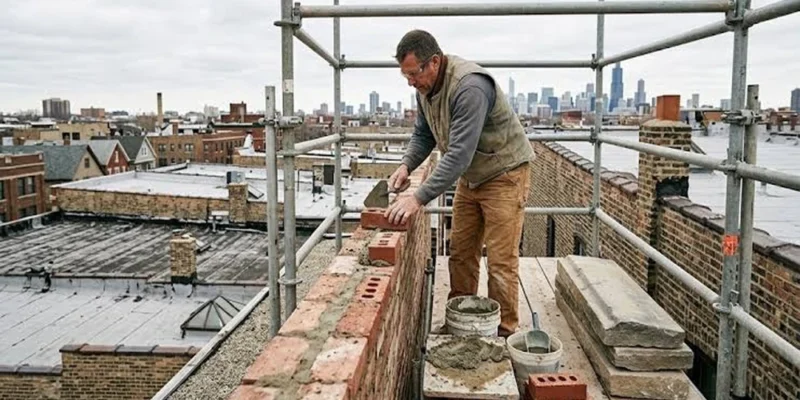
You paid to have the parapet repointed last year. It looked great. Then the first big storm hit, and the stain on the top-floor ceiling came right back. Now you’re wondering if you paid for the wrong fix.
Often, the mason didn’t do anything wrong. The real issue is that a parapet is part of the roof system. Fix one without the other, and water finds the gap. That’s why many owners turn to general contractors in Astoria NY who can look at the parapet, the roof, and everything in between as one job.
What Is a Parapet, and Why Does It Leak?
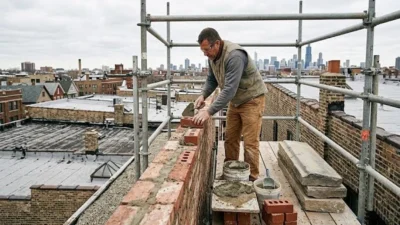
A parapet is the short wall that rises above the roof line. It’s exposed on both sides and on top, so it takes more rain, wind, and freeze-thaw than any other wall on the building.
Water usually gets in through a few weak spots: cracked coping stones (the cap on top of the wall), failed flashing where the roof meets the wall, open mortar joints, or rusted anchors and railings.
Where does the water go?
Once inside, water travels down through the wall. It can show up a floor or two below, far from where it entered. That’s why chasing a ceiling stain from the inside rarely solves anything.
Why Parapet Wall Repair Often Needs More Than a Mason
Three trades meet in one spot
The top of the wall has coping stones and their joints. On the roof side, the roof membrane turns up the wall and is covered by counterflashing, a metal strip that sheds water. Some walls also have flashing built inside them. Masonry, metal, and roofing all meet within a few feet. If the roofer and the mason never talk, gaps get left behind.
The roof may be the real problem
New mortar won’t help if the roof membrane has split at the base of the wall. And a brand-new roof that isn’t properly tied into the parapet leaves the same weak point in place.
How General Contractors in Astoria NY Plan the Work
Inspect from every side
A good inspection covers the street face, the roof face, and the top of the wall. That means checking joints, looking at every coping stone, and lifting flashing edges to see what’s underneath.
Do the work in the right order
The usual sequence is masonry and coping first, then flashing, then the roofing tie-in. Doing it out of order means tearing up brand-new work to fix something underneath.
Handle permits and safety
Work on a street-facing parapet may need a sidewalk shed or scaffolding, and both need city permits. On buildings taller than six stories, parapets are also part of Local Law 11 (FISP) inspections, and unsafe conditions must be repaired.
A Real-World Example
Picture a three-story brick building near Steinway Street. The owner had the parapet repointed, but the top-floor tenant still gets leaks. A full inspection shows the new mortar is fine. The problem is the counterflashing, which has pulled away from the wall and let water crack the roof membrane behind it.
The contractor reseals the flashing, patches the membrane, and replaces two cracked coping stones while the crew is already up there. One visit, one plan, and the leak stops.
When to Schedule Parapet Wall Repair
Watch for warning signs
- Stains or peeling paint on top-floor ceilings and walls
- Cracked, loose, or shifted coping stones
- Missing or crumbling mortar along the top
- Leaning or bulging sections
- Rust stains near railings or anchors
If anything looks loose, don’t wait. Falling masonry is a real danger to people on the sidewalk below.
Plan around the weather
Mortar and roofing materials cure best in mild weather, so spring and fall are ideal. Book the inspection in winter so the work can start as soon as temperatures allow.
Fix the Whole System, Not Just the Symptom
A parapet stays dry only when the masonry, coping, flashing, and roof all work together. Treat them as one system, and the repair lasts.
RZ Construction Group is one of the general contractors in Astoria NY that handles masonry and roofing with one team. If your top floor keeps leaking, call us at 718-938-9887 to book an inspection, or learn more about our parapet wall repair services.







Comments