
 By
By 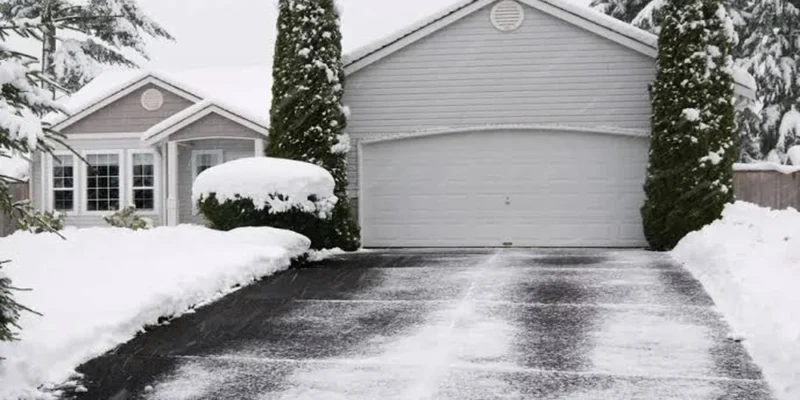
Edmonton homeowners tend to remember the first windrow of the season more clearly than the first snowfall. The snow itself usually shows up quietly in October and melts off within a day or two, which makes winter feel further away than it is. Then a proper system rolls through, the graders come down the street, and a knee-high ridge of packed snow seals the bottom of the driveway just as everyone needs to leave for work. That is the morning most people start calling around for help, and by then the easiest part of the decision has already passed.
Why an Edmonton Winter Is So Hard on a Driveway
Edmonton sits far enough north that its snow tends to stay once it arrives. Without the chinook thaws that give Calgary a break every few weeks, any snow that is not cleared promptly gets driven on, compacted and frozen into the layer beneath it, and January and February regularly bring long stretches below minus twenty. A driveway that gets shovelled late a few times in a row develops ruts that refreeze overnight, and those ruts are far harder to remove than the snow that created them. By mid-winter, plenty of driveways that started clean are carrying ice no shovel will touch.
The length of the season matters as much as the cold. Snow that sticks from November through March, with the occasional storm reaching into April, means clearing a driveway twenty or thirty times in an ordinary year and more in a heavy one. That is a lot of dark, early mornings, which is the main reason so many people who planned to handle it themselves end up looking into snow removal in Edmonton by the middle of December.
The Windrow Problem
Windrows are the part of an Edmonton winter that catches newcomers off guard. When crews blade residential streets, the snow pushed off the roadway has to go somewhere, and it often ends up as a dense ridge across the ends of driveways. Because that snow has been compressed by a grader blade and is often mixed with ice and road sand, it is heavier and harder than anything that fell on the driveway itself. A large one can take half an hour to cut through by hand, usually on the morning there is no time to spare.
This is where residential plans differ in ways that are easy to miss when comparing quotes. Some contracts treat a windrow as an extra callout or leave it out entirely, while others include it every time the street is bladed. When you compare options for residential driveway snow clearing across Edmonton, ask directly whether the ridge left by a city grader is covered, how quickly a crew comes back once the street has been done, and whether that return visit costs anything extra. The answer tells you a good deal about whether the contract was written with Edmonton streets in mind.
The sidewalk counts too
Edmonton’s bylaw requires property owners to keep the public sidewalk next to their home clear of snow and ice, and the city generally allows about 48 hours after a snowfall ends before it acts on a complaint. That obligation does not pause because the homeowner is away or the driveway service happens to skip it. A plan that skips the city sidewalk leaves the homeowner open to a complaint and a possible fine. It is worth confirming in writing that the sidewalk is part of the service area.
What to Look for in a Residential Contract
Most residential contracts in Alberta are either seasonal, with a flat fee covering every qualifying snowfall, or per visit, with a charge each time a crew comes out. Seasonal snow plans for Edmonton homes tend to make the most sense because the winter here is long and steady, whereas per-visit pricing can look cheap in October and turn expensive by February. As a typical range, seasonal plans for a standard residential driveway in Alberta cities often fall somewhere between a few hundred dollars and a little over a thousand for the winter, depending on driveway size and what is included.
Trigger depth is the first thing to pin down. A plan that only sends a crew at five centimetres leaves you to shovel the lighter snowfalls yourself, and in Edmonton those light snowfalls are exactly the ones that compact into ice when nobody touches them. Ask what depth triggers a visit, whether the crew comes during a long storm or only after it ends, and roughly what time residential routes usually finish. Ask about ice as well, since a follow-up pass after a thaw can matter as much as the plowing when a clear driveway turns slick overnight in March.
Protecting the yard underneath
Crews working in the dark on a snow-covered property cannot always see where the driveway ends and the lawn begins. Marking the edges with stakes before the ground freezes saves turf, sprinkler heads and landscape edging from blade damage, and a good contractor will either put markers in or ask you to. It is also worth agreeing on where the snow gets piled, so it does not bury a shrub bed or send meltwater toward the foundation in spring.
Why the Contract Should Be Signed Before the Snow Sticks
Snow removal companies plan their routes and hire their crews before the season starts. Each crew can only reach so many driveways within a reasonable window after a snowfall, so routes fill up, and once a route is full a company either turns new clients away or adds them to the end of the line. Homeowners who start calling after the first big storm often find the providers they wanted are full, or that the only openings left reach them late in the morning.
Signing in October also leaves time for the small jobs that make winter easier. The edges can be marked while the lawn is still visible, the crew can walk the property and see any heaved slabs or raised thresholds that might catch a blade, and you can compare two or three quotes without a buried driveway forcing the decision.
In a city with a five-month winter, a driveway plan belongs with the furnace tune-up and the winter tires as part of the fall routine. The homeowners who reach February with the least frustration are usually the ones who settled it early, and a few good questions now about windrows, sidewalks and trigger depth will serve the next five months far better than a hurried search after the first heavy snowfall.
Contact “PROPERTY WERKS” For More Information:
Address
1147 Renfrew Drive NE, Calgary, AB T2E 5H9
Phone
(403) 239-1269
Hours of operation
Weekdays 9 a.m.–5 p.m.
Website
https://www.propertywerks.ca/edmonton
Map











Comments