
 By
Faded Lines and the Myths That Keep Them That Way
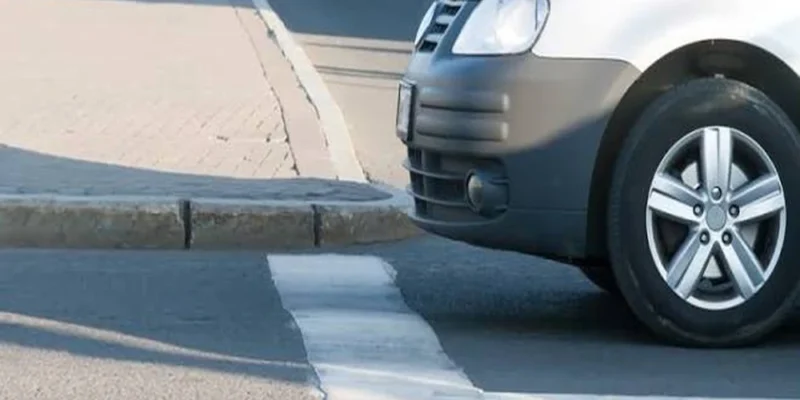
Intersection design has shifted considerably over the past two decades, moving from a purely reactive model of repainting lines once they vanish to a more deliberate approach built around visibility studies, traffic counts, and material performance. Cities that once treated pavement markings as an afterthought now factor them into broader safety plans. Despite that shift, a surprising number of property managers, contractors, and even some municipal crews still operate on outdated assumptions about what makes a stop bar effective.
One common misconception is that any white paint applied at the correct distance from the crosswalk will do the job. In reality, the chemistry of the material, the texture of the pavement underneath, and the angle of approach all influence how well a driver perceives the line in rain, glare, or low light. Another persistent myth is that stop bars are purely a legal formality, existing mainly to mark a line for citations rather than to guide behavior. That view ignores the psychological role these markings play, since drivers often brake and position their vehicles based on visual cues long before they consciously register a stop sign or signal.
There is also a belief that once a stop bar is installed correctly, it needs no further attention until it becomes nearly invisible. Pavement wears unevenly, and high-traffic intersections near turn lanes or bus routes degrade far faster than quieter side streets. Treating every location as if it ages at the same rate leads to patchwork maintenance schedules that leave some intersections dangerously under-marked for months.
Matching Materials and Placement to Real Traffic Behavior
Effective stop bar work starts with understanding how vehicles actually approach a given intersection, not how an engineering drawing assumes they will. Speed differentials matter enormously here. An intersection where vehicles regularly arrive above the posted limit needs a stop bar positioned and sized to account for longer stopping distances and reduced reaction time, especially where sightlines are partially blocked by signage, trees, or parked vehicles.
Thermoplastic markings have become the preferred choice for most moderate-to-high traffic intersections because they bond more durably to asphalt and resist the kind of rutting that regular paint suffers under heavy braking loads. Epoxy-based systems offer another layer of durability in areas with heavy oil exposure, such as near fueling stations or loading zones, where standard paint tends to lift prematurely. Reflective glass beading embedded into the material during application also plays a bigger role than most people expect, since it determines how visible the line remains during nighttime driving or heavy rain, conditions where a disproportionate share of intersection accidents occur.
Width and length specifications are not arbitrary either. A stop bar that is too narrow loses visual weight at distance, while one placed too close to the crosswalk gives drivers less room to judge their stopping point accurately. Getting these dimensions right requires more than following a generic template, since local traffic volume, road grade, and signal timing all shift what counts as adequate spacing.
Scheduling Work Without Disrupting Traffic Flow
Timing a restriping project around traffic volume is one of the most overlooked parts of the process. Crews that attempt major intersection work during peak commuting hours create safety risks for themselves and confusion for drivers trying to navigate around temporary markings or cones. Many municipalities and private contractors now schedule this work during late-night or early-morning windows specifically to reduce that friction, even though it adds cost and requires more coordination with local authorities. Choosing a contractor experienced with stop bar striping for intersections, like stop bar striping for intersections, often means the difference between a short, well-managed closure and a drawn-out project that frustrates commuters for days.
Surface preparation deserves as much attention as the material itself. Old paint, oil residue, and loose debris all interfere with adhesion, and skipping a proper cleaning or grinding step shortens the lifespan of even premium thermoplastic markings. Weather conditions on the day of application matter too, since both temperature and moisture affect curing time and bond strength. A rushed job in poor conditions might look fine for the first few weeks before failing far earlier than it should.
Long-term planning also means building in a realistic inspection cycle rather than waiting for complaints or visible wear to trigger action. Intersections near schools, hospitals, or commercial centers with heavy pedestrian crossings warrant more frequent checks than low-traffic residential corners. Pairing that inspection schedule with a contractor who understands regional wear patterns gives property owners and municipalities a far more reliable way to keep intersections safe without constantly reacting to complaints after the fact.







Comments